
Due Diligence 101: Financial, Legal & Operational Checks for M&A
 By
By 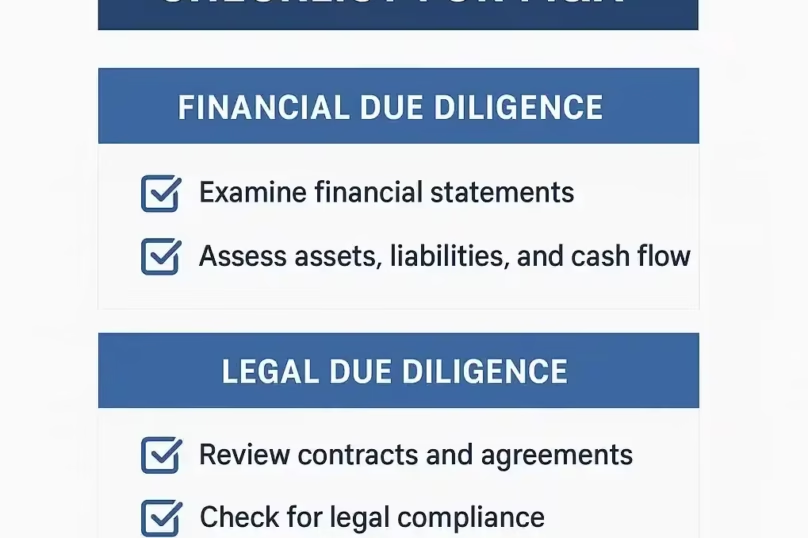
Due Diligence 101: Financial, Legal & Operational Checks for M&A
Mergers and Acquisitions (M&A) are among the most significant decisions a business can make. Whether it’s a growing company acquiring a competitor, an investor funding a startup, or a large corporate restructuring its portfolio, one principle remains the same: no deal should be made without thorough due diligence.
Due diligence is essentially the deep investigation of a company’s financial, legal, operational, and commercial aspects before finalizing a transaction. It answers critical questions:
- Is the target company worth the price?
- Are there hidden liabilities or compliance risks?
- Will the deal deliver long-term value?
In this guide, we’ll explore what due diligence means, its types, its role in M&A transactions, key checklists, and best practices for businesses in India and globally.
What is Due Diligence?
At its core, due diligence is the process of fact-checking a business before signing a merger, acquisition, partnership, or investment agreement. It involves collecting, verifying, and analyzing information to uncover risks, liabilities, and growth opportunities.
Think of it as a business equivalent of a medical check-up. Just as a doctor runs tests before a surgery, companies must run due diligence before a transaction to avoid unpleasant surprises
Why is Due Diligence Important in M&A?
M&A deals are complex, involving millions (sometimes billions) in investment. Without due diligence, companies risk:
- Overpaying for the deal
- Inheriting lawsuits, debts, or tax problems
- Facing cultural or operational integration issues
- Regulatory penalties due to non-compliance
Types of Due Diligence in M&A
Due diligence isn’t one-size-fits-all. Depending on the nature of the deal, different aspects of the company are investigated.
1. Asset-Based Valuation
- Examines historical financial statements, revenue streams, debt, tax liabilities, and working capital.
- Answers: Is the company financially stable? Are profits sustainable? Are assets correctly valued?
2. Legal Due Diligence (LDD)
- Reviews corporate structure, contracts, intellectual property rights, litigation history, licenses, and compliance.
- Answers: Are there any lawsuits? Are contracts enforceable? Is IP properly protected?
3. Operational Due Diligence (ODD)
- Focuses on internal processes like HR, supply chain, IT systems, and customer relations.
- Answers: Is the company operationally efficient? Can it scale post-merger?
4. Commercial Due Diligence (CDD)
- Evaluates market position, competition, customer base, and growth opportunities.
- Answers: Does the company have a strong market presence? What is its long-term potential?
5. Environmental, Social & Governance (ESG) Due Diligence
- Increasingly relevant in India and worldwide. Reviews sustainability, labor practices, and ethical compliance.
Due Diligence Checklist for M&A in India
Here’s a comprehensive checklist that investors, buyers, and financial institutions typically follow:
Financial Due Diligence
- 3–5 years of audited financial statements
- Revenue breakdown by product, customer, region
- Debt obligations and credit facilities
- Tax filings, GST, TDS, and transfer pricing records
- Working capital assessment
Legal Due Diligence
- Certificate of incorporation, MoA, AoA
- Shareholding pattern and ownership structure
- Material contracts, vendor and customer agreements
- IP ownership (patents, trademarks, copyrights)
- Pending or potential litigations
- Regulatory approvals (RBI, SEBI, FEMA for cross-border deals)
Operational Due Diligence
- HR policies, payroll structure, attrition rates
- IT systems, cybersecurity, software licenses
- Supply chain contracts and vendor dependencies
- Customer complaint records
- Insurance policies
Commercial & Strategic Due Diligence
- Competitor analysis
- Market growth forecasts
- SWOT analysis (Strengths, Weaknesses, Opportunities, Threats)
- Industry-specific risks
Due Diligence in the Indian Context
In India, M&A due diligence has some unique aspects compared to global markets:
Regulatory Compliance – Companies must comply with laws such as:
- Companies Act, 2013
- SEBI regulations (for listed companies)
- FEMA (for cross-border M&A)
- Income Tax Act & GST provisions
Cultural Integration – Especially relevant when foreign firms acquire Indian companies, as organizational culture and work practices may differ.
Litigation Risks – Indian companies often have pending disputes, so legal due diligence is crucial.
Infrastructure & Operational Risks – Supply chain inefficiencies, regulatory delays, or sector-specific hurdles (e.g., in real estate or telecom).
Steps in a Due Diligence Process
A typical M&A due diligence process follows structured steps:
- Preparation – Define scope, set timelines, sign NDAs.
- Document Collection – Request financial, legal, operational, and market data.
- Analysis & Verification – Review information, cross-check with independent sources.
- Interviews & Site Visits – Meet key stakeholders, inspect facilities.
- Risk Assessment – Highlight potential red flags and liabilities.
- Report Preparation – Summarize findings in a Due Diligence Report (DDR).
- Decision-Making – Buyer decides to proceed, renegotiate, or withdraw.
Common Red Flags Identified During Due Diligence
- Unreported tax liabilities
- Inflated revenues or underreported expenses
- Weak internal controls or lack of ERP systems
- Legal disputes not disclosed initially
- Over-dependence on a single customer or vendor
- Environmental violations or non-compliance fines
- Employee unrest or high attrition rates
Spotting these early helps prevent costly mistakes.
Future of Due Diligence in India
As India’s M&A market matures, due diligence is becoming more data-driven and technology-enabled. Some future trends include:
- AI & Analytics – Automating financial analysis, fraud detection, and risk assessment.
- Virtual Data Rooms (VDRs) – Secure cloud platforms for document sharing.
- ESG-Focused Reviews – Sustainability and ethical factors gaining weight in investment decisions.
- Cross-Border M&A Growth – More Indian companies entering global partnerships.
Best Practices for Effective Due Diligence
- Start early – Don’t wait until deal closing.
- Engage multidisciplinary experts – finance, law, tax, and operations.
- Use digital tools for faster, accurate reviews.
- Keep communication open with the target company.
- Always validate data with third-party sources.
Conclusion
Due diligence is the backbone of successful M&A transactions. It ensures buyers, investors, and financial institutions make informed decisions based on facts, not assumptions.
Frequently Asked Questions (FAQs)
Q1. What is the main purpose of due diligence in M&A?
Ans: To verify the financial, legal, and operational health of a company and reduce risks before finalizing a transaction.
Q2. How long does due diligence take in India?Ans: Typically 4–12 weeks, depending on the size and complexity of the deal.