Top 7 Factors Affecting the Value of a Pre-Owned Aircraft
 By
By 
(What Actually Moves the Needle — Not What Listings Tell You)
If aircraft valuation were as simple as checking the year of manufacture and total flight hours, the secondary market would be far less confusing than it is today.
In reality, pre-owned aircraft pricing often surprises first-time buyers—and even experienced operators. Two aircraft that look almost identical on paper can end up with noticeably different values once you dig into maintenance history, records, and future obligations.
This article breaks down the seven factors that genuinely affect the value of a pre-owned aircraft, based on how aircraft are evaluated in real transactions—not how they are advertised.
No hype. No “best practices” fluff. Just what actually matters when money is on the table.
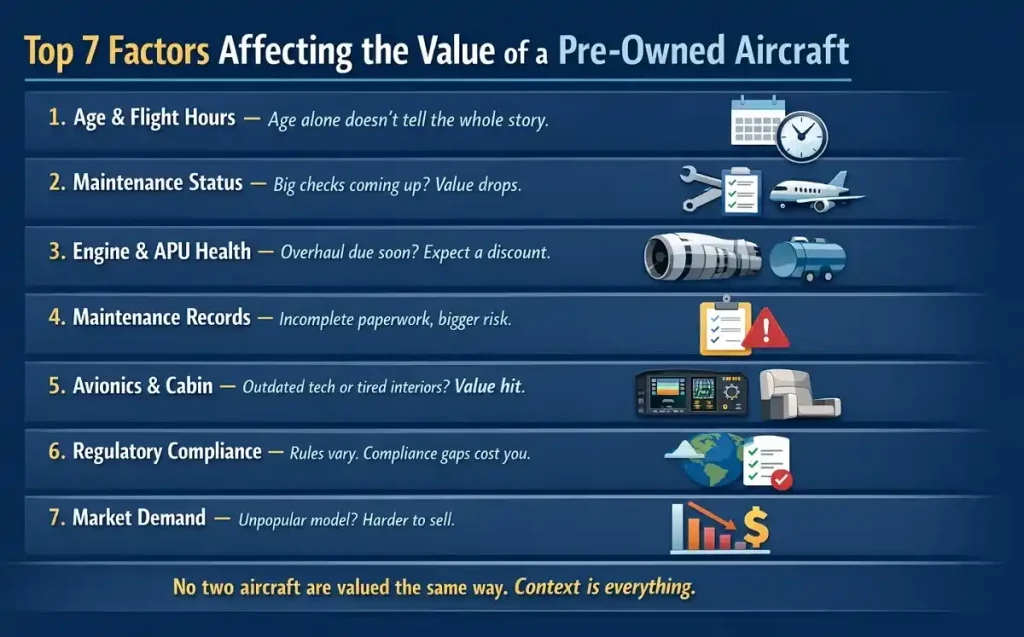
1. Aircraft Age and Total Time: Useful, But Overrated
Age and total time are usually the first numbers buyers look at. That’s understandable—they’re easy to compare. But relying too heavily on them is one of the most common valuation mistakes.
Calendar age tells you something about:
- Design generation
- Obsolescence risk
- Remaining fatigue life (in a broad sense)
Total time and cycles matter because most inspections and component lives are usage-driven.
Where people go wrong:
They assume “newer = better” and “lower hours = safer value.” That’s not always true.
An aircraft that flew consistently, under stable operating conditions, with disciplined maintenance can be a better asset than a younger aircraft that sat idle for long periods or was operated aggressively. Storage, climate exposure, and operational discipline matter more than many expect.
Age and hours are a starting point—not a conclusion.
Suggested Service
2. Maintenance Status: Future Costs Decide Today’s Value
This is where valuation becomes uncomfortable—but honest.
Buyers don’t just buy an aircraft. They buy its future maintenance obligations.
An aircraft approaching:
- A heavy structural check
- Engine overhaul thresholds
- Landing gear or major component overhauls
will almost always face price pressure, even if it’s currently airworthy and performing well.
Why? Because the next owner has to fund those events.
Experienced buyers mentally adjust the purchase price by asking:
“What will this aircraft actually cost me to operate over the next two to three years?”
Aircraft with balanced maintenance status—nothing overdue, nothing immediately looming—tend to hold value better, even if their headline specs are less impressive.
3. Engine and APU Condition: Where Value Can Swing Fast
Engines are often the most valuable—and volatile—part of a pre-owned aircraft.
What matters isn’t just total engine time, but:
- Time since last shop visit
- Remaining life on life-limited parts
- How the engine has been operated
- Whether it’s on a recognized maintenance program
An aircraft with engines nearing overhaul may still fly perfectly well, but buyers will discount it because major expenditure is inevitable.
APUs don’t get the same attention as engines, but they should. In certain climates and operating environments, APU reliability directly affects dispatch reliability—and costs.
Important reality:
Engine value is highly model-specific. Market confidence in a particular engine type can change quickly due to reliability issues, OEM support decisions, or regulatory scrutiny.
4. Maintenance Records: Paperwork That Decides Real Money
Records are boring—until they’re missing.
Incomplete or inconsistent maintenance records create uncertainty. And uncertainty is something buyers, lenders, and insurers all price in.
Common problem areas include:
- Gaps in component traceability
- Poor documentation of modifications
- Missing historical compliance records
- Records spread across multiple formats or jurisdictions
Even small gaps can reduce value more than people expect. Not because the aircraft is unsafe, but because risk becomes harder to quantify.
In some cases, record issues don’t just reduce price—they limit financing options or delay transactions entirely.
5. Configuration, Avionics, and Cabin Reality
Not all upgrades add value. Some actually reduce it.
Avionics that meet current airspace requirements generally support value, especially for aircraft used internationally. Outdated navigation capability can narrow the buyer pool.
Cabins are trickier.
A fresh interior helps—but only if it’s neutral and broadly acceptable. Highly personalized layouts or styling often appeal to one owner and discourage ten others.
Refurbishments are expensive, and resale rarely recovers the full cost. Sellers often underestimate how much buyers discount for “I’ll need to change this anyway.”
6. Regulatory Compliance and Operating Jurisdiction
Regulation quietly shapes aircraft value.
An aircraft that complies with widely accepted regulatory frameworks is simply easier to trade. Easier to import. Easier to finance. Easier to insure.
Jurisdiction matters because:
- Maintenance oversight standards differ
- Acceptance of modifications varies
- Transition between authorities takes time and money
Fixing regulatory gaps after acquisition is rarely straightforward. It often involves downtime, paperwork, and unplanned costs—things buyers factor into pricing from day one.
7. Market Demand, Model Reputation, and Liquidity
Even a technically solid aircraft can lose value if the market loses confidence in the model.
Common reasons include:
- Declining fleet size
- Reduced OEM support
- Uncompetitive operating economics
- Shifts in mission requirements
On the flip side, some older aircraft hold value surprisingly well because they are proven, well-supported, and familiar to operators.
Liquidity matters more than many sellers realize. Aircraft that can be sold, financed, and placed into service quickly tend to retain value—even if they aren’t cutting-edge.
Why Aircraft Valuation Is Never One-Size-Fits-All
There’s no universal “correct” value for a pre-owned aircraft.
Value depends on:
- Intended use
- Risk tolerance
- Access to maintenance infrastructure
- Financing and regulatory constraints
An aircraft that is unattractive to one buyer may be a perfect fit for another. That’s why serious valuations go beyond price lists and look at context.
Who Should Pay Close Attention to These Factors
This article is especially useful for:
- First-time aircraft buyers
- Sellers preparing for a transaction
- Lenders and lessors assessing risk
- Advisors supporting acquisition decisions
It may be less relevant for:
- Short-term charter-only decisions
- Transactions driven primarily by tax or corporate structuring
FAQs (Based on Real Buyer Questions)
1. Is lower aircraft age always better for resale?
No. Maintenance balance and records often matter more.
2. Can good engines offset poor airframe history?
Only partially. Buyers look at the whole asset, not just engines.
3. How damaging are small gaps in records?
More damaging than most sellers expect, especially for financing.
4. Do expensive cabin upgrades increase value?
Not always. Neutral layouts usually hold value better.
5. Why do similar aircraft sell at very different prices?
Maintenance timing, records quality, and market timing.
6. Does jurisdiction really affect resale?
Yes. Acceptance and transferability matter.
7. Are maintenance programs worth it from a value perspective?
Sometimes—but terms and transferability matter.
8. How quickly can aircraft market sentiment change?
Faster than most people think.
9. Should buyers focus more on current condition or future costs?
Future costs usually drive negotiations.
10. Is professional valuation really necessary?
If capital risk matters, yes.